

Quick Answers





Are CNC router spindles standardized?
When it comes to CNC router spindles, one common question that arises is whether these components are standardized across the industry.
In the manufacturing world, standardization plays a crucial role in ensuring compatibility, interchangeability, and ease of maintenance.
Understanding
CNC router spindles are the heart of any CNC machining system.
These devices are responsible for rotating the cutting tools that sculpt, drill, engrave, and shape materials such as wood, metal, plastics, and composites.
The spindle’s speed, power, and precision have a significant impact on the quality of the finished product and the efficiency of the machining process.
Types
There are several types of CNC router spindles available in the market, each catering to specific machining requirements. The most common types include:
- Air-cooled spindles
- Water-cooled spindles
- Automatic tool change spindles
- High-frequency spindles
Standardization
While CNC router spindles come in various configurations and specifications, there is no universal standard that governs their design and dimensions.
Unlike some other components in the CNC machinery realm, such as tool holders or cutting inserts, CNC router spindles do not adhere to a strict set of guidelines.
However, that doesn’t mean CNC router spindles lack any standardization at all.
In certain aspects, manufacturers may adhere to commonly accepted norms or industry practices to ensure some level of compatibility and familiarity for users. These may include:
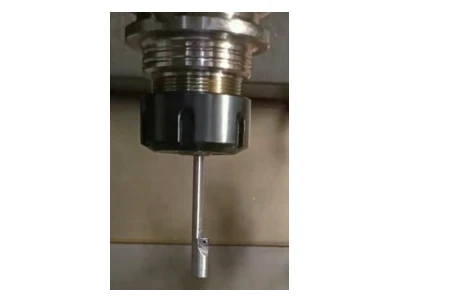
- Spindle taper sizes (e.g., ISO, HSK)
- Mounting flange dimensions
- Spindle motor power ratings
- Standard electrical connections
Challenges of Non-Standardization
One of the primary challenges posed by the lack of standardization in CNC router spindles is the limited interchangeability between different brands and models.
This can make it challenging for manufacturers to switch between spindles or upgrade their existing machinery without significant modifications or adaptations.
Additionally, the absence of standardized components can lead to compatibility issues with other parts of the CNC system, such as tool changers, cooling systems, and control software.
This can result in suboptimal performance, increased downtime, and higher maintenance costs.
Customization and Specialization
Despite the challenges posed by non-standardization, the lack of rigid guidelines also allows for greater customization and specialization in CNC router spindles.
Manufacturers have the flexibility to tailor their spindles to specific applications, materials, and cutting requirements, leading to enhanced performance and efficiency in certain scenarios.
This ability to customize spindles according to unique operational needs can be particularly beneficial for industries with specialized machining requirements, such as aerospace, automotive, or medical device manufacturing.
By offering a range of options and configurations, manufacturers can cater to a diverse set of customer demands and preferences.
Future
As technology continues to advance and the demand for precision machining increases, the role of CNC router spindles will become increasingly critical.
While standardization may offer some benefits in terms of ease of use and compatibility, the ability to innovate, customize, and adapt will likely drive future developments in spindle design and functionality.
Manufacturers and engineers in the CNC machining industry must stay current with the latest trends, technologies, and best practices to fully leverage the potential of CNC router spindles.
By combining standardized elements with customized solutions, they can achieve optimal performance, efficiency, and quality in their machining operations.
Conclusion
While CNC router spindles may not be standardized in the traditional sense, they do exhibit certain commonalities and industry practices that provide a degree of consistency and familiarity for users.
The lack of strict guidelines allows for greater customization and specialization, enabling manufacturers to tailor spindles to specific applications and requirements.
As the CNC machining industry continues to evolve, the balance between standardization and customization will shape the future of CNC router spindles.
By understanding the nuances of spindle design, functionality, and compatibility, manufacturers can optimize their machining processes and remain competitive in the market.